

- Paul Eisen
- AI
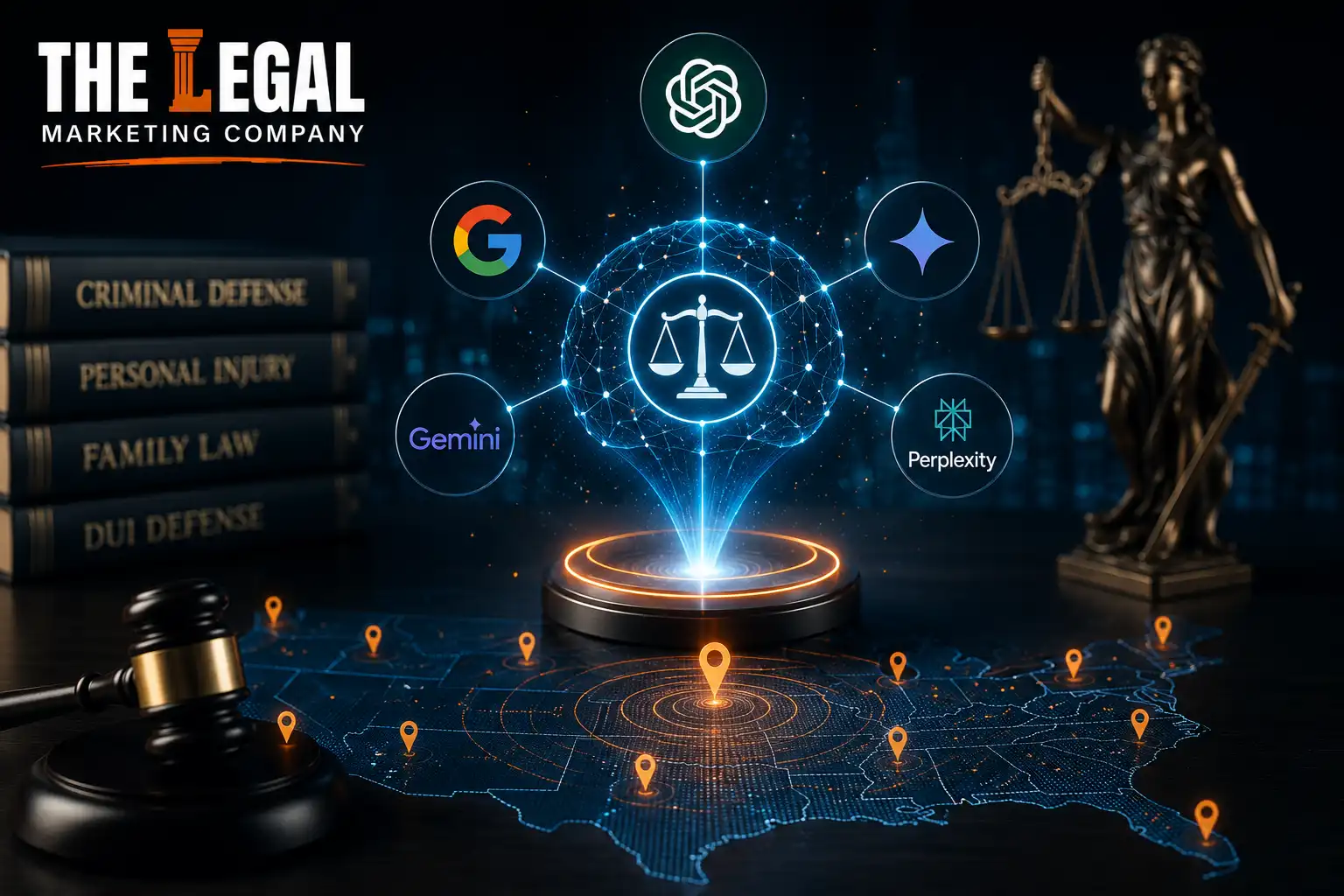
Potential clients are no longer starting their search for an attorney with a list of ten blue links. They are asking ChatGPT which personal injury lawyer to call after an accident. They are asking Google AI Overviews who handles custody cases in their county. They are asking Perplexity to compare divorce attorneys near them.
If your firm is not showing up in those answers, you are invisible to a growing share of the people who need you most.
This guide explains how AI systems decide which law firms to recommend and what your firm can do to become one of the options they suggest.
Why AI Search Is Different From Traditional SEO
Traditional SEO earns a ranking position on a results page. AI search earns a mention inside a generated answer. These are not the same goal, and they do not respond to the same tactics.
Google AI Overviews, ChatGPT, and Perplexity are not ranking your website. They are synthesizing an answer from many sources and deciding which entities, meaning specific firms and attorneys, deserve to be named in that answer. A firm can rank well in traditional search and still be entirely left out of the AI-generated response.
This is why we describe this work as AEO and GEO, Answer Engine Optimization and Generative Engine Optimization, alongside traditional SEO. The three overlap, but AEO and GEO require their own strategy.
What AI Models Are Actually Looking For
Large language models and AI Overviews pull from patterns across the web, not a single page. To recommend your firm by name, these systems generally require the following.
Clear, consistent entity information. Your firm name, attorneys’ names, practice areas, and location need to appear consistently across your website, directories, and citations. Inconsistency confuses the entity matching these systems rely on.
Direct answers to real questions. AI models favor content that states a clear answer near the top of a page, then supports it with context. A paragraph that answers “What should I do after a car accident in Florida” in the first two sentences is more likely to be pulled into a generated response than a page that builds up to the point.
Structured data. Schema markup, particularly LegalService, Attorney, and FAQPage, provides these systems with machine-readable confirmation of who you are, what you do, and where you practice. This is one of the most overlooked levers in AI visibility.
Topical depth. A single blog post about car accidents will not carry the same weight as a full content ecosystem covering car accidents, motorcycle accidents, pedestrian accidents, wrongful death, and the statutes that govern each. AI systems reward firms that demonstrate depth across a practice area, not just a single page targeting a keyword.
Third-party validation. Reviews, legal directories, press mentions, and citations from other authoritative sites all feed the trust signals these models weigh. This is part of why E-E-A-T: Experience, Expertise, Authoritativeness, and Trust, still matters in an AI-driven search environment.
Steps to Get Your Firm Recommended by AI
Audit your existing content for direct-answer structure. Look at your top service pages and blog posts. Do they answer the core question in the opening sentences, or do they open with a general introduction before getting to the point? AI systems favor the former.
Build out topic clusters, not standalone pages. Every practice area should have a pillar page supported by pages on related questions, local nuances, and specific case types. This signals to AI systems that your firm has genuine depth, not just a single optimized page.
Implement schema markup across the site. LegalService schema, Attorney schema for each lawyer’s bio, and FAQPage schema on pages that answer common questions all give AI models a clearer, faster way to confirm your firm’s relevance.
Keep your firm’s information identical everywhere. Name, address, phone number, attorney names, and practice areas should match exactly across your website, Google Business Profile, legal directories, and any press mentions. Small inconsistencies slow down or block entity recognition.
Publish content that answers real client questions. Think about what a person actually types or asks when they are searching for a lawyer. Questions like “how long do I have to file a workers’ comp claim” or “what happens at a custody modification hearing” make far better AEO content than generic keyword-stuffed pages.
Earn mentions on authoritative third-party sites. Legal directories, bar association pages, local news coverage, and guest contributions all strengthen the trust signals AI systems use to decide who to recommend.
Why This Matters More for Law Firms Specifically
Legal services fall under what Google classifies as YMYL (Your Money or Your Life) content. AI systems apply extra scrutiny to YMYL topics because the stakes of a wrong recommendation are high. A firm that clearly demonstrates experience, expertise, authority, and trust has a real advantage over a firm that has simply optimized for keywords.
This also means shortcuts carry more risk in the legal space than in almost any other industry. Thin content, fabricated statistics, or inconsistent firm information will not just fail to rank. It can actively keep AI systems from citing your firm at all.
How We Approach This at The Legal Marketing Company
We build AI search visibility the same way we build traditional SEO, around a structured content ecosystem, technical implementation, and consistent entity signals, because that is what earns both search rankings and AI-generated recommendations.
Our process for law firm clients includes full technical audits, pillar and cluster content built around real client questions, schema implementation across service pages and attorney bios, and ongoing content production designed to answer the exact questions potential clients are asking AI tools right now.
If your firm wants to be the answer AI gives when someone asks who to call, we can help you get there.
Frequently Asked Questions
How is AI search different from Google search rankings?
Google search rankings place your website on a results page. AI search, including Google AI Overviews, ChatGPT, and Perplexity, generates a written answer and decides which firms or attorneys to mention by name inside that answer. Traditional ranking well does not guarantee a mention in an AI-generated response.
Can a small or solo law firm get recommended by AI search tools?
Yes. AI systems reward clear entity information, structured content, and topical depth over sheer website size. A smaller firm with consistent information and well-structured content can outperform a larger firm with an inconsistent or thin web presence.
Does schema markup actually make a difference for AI visibility?
Yes. Schema gives AI systems machine-readable confirmation of who you are, what you practice, and where you are located. It reduces the ambiguity these systems must resolve on their own, making your firm easier to cite accurately.
How long does it take to see results in AI search?
Timelines vary based on a firm’s current content depth and technical foundation, but building the topical authority and structured data these systems rely on is an ongoing process rather than a one-time fix.